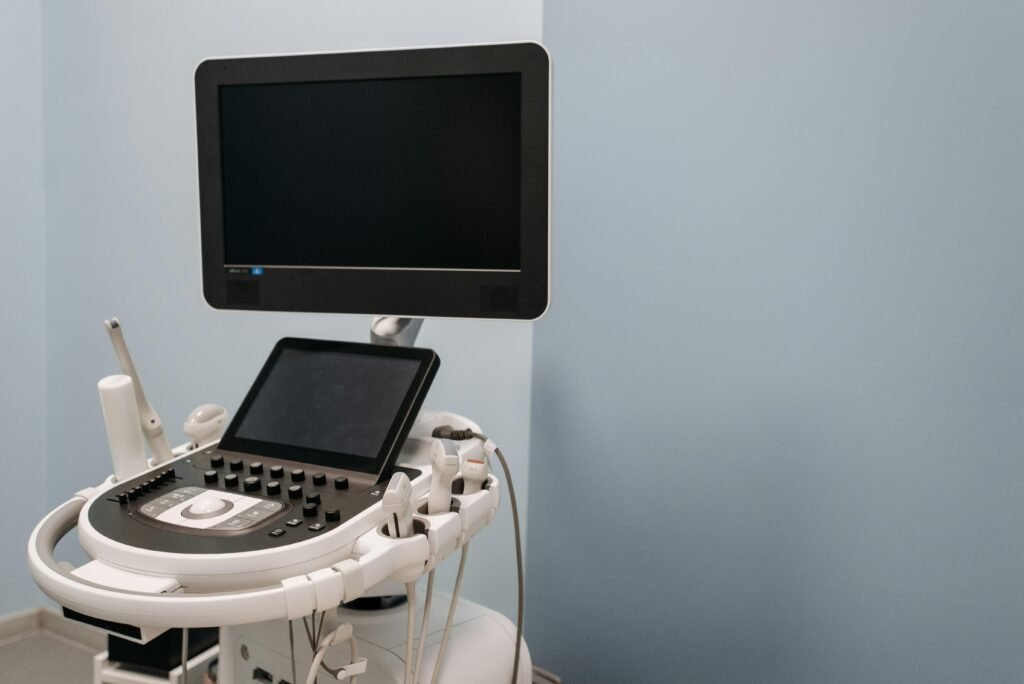
Baja California — and Tijuana in particular — is one of the most important medical device manufacturing regions in the world. With over 80 medical device companies operating in the state, including facilities for Medtronic, BD, Welch Allyn, CareFusion, and dozens of contract manufacturers, the region has built a deep ecosystem of precision manufacturing capability specifically oriented toward medical device quality standards. For U.S. medical device OEMs and contract manufacturers, this creates a unique sourcing opportunity: ISO 9001 certified CNC machining with FDA-compliant material traceability, full FAI documentation, and same-day delivery to San Diego — from suppliers who have been producing to medical quality standards for years, not months.
01 Baja California’s Medical Device Ecosystem — Why It Matters
The depth of Baja California’s medical device manufacturing ecosystem is not widely understood outside the industry. The facts change the sourcing conversation:
80+
Medical Device Companies
Over 80 medical device manufacturers operate in Baja California, making it one of the highest concentrations of medical device production capacity in North America.
FDA
FDA-Regulated Operations
Many Tijuana facilities are FDA-registered and produce under 21 CFR Part 820 QSR — the same regulatory framework as U.S. domestic medical device manufacturers.
Tier 2/3
Deep Supplier Base
A mature ecosystem of precision CNC machining, injection molding, electronics assembly, and special process suppliers has grown to support Tier 1 OEMs — available for your program too.
30 min
From San Diego
Daily oversight, supplier audits, and incoming inspection at your San Diego facility on the same day — logistics genuinely impossible with Asian or European sourcing.
«When your quality team can drive to the supplier for an unannounced audit and be back in San Diego before lunch, your supply chain risk profile changes fundamentally.»
— Baja Supplies Sourcing Team
02 Device Classification & What It Means for Your Supplier Requirements
FDA device classification — Class I, II, or III — drives the documentation and quality system requirements your component supplier must meet:
Class I
General Controls
Low Risk
Examples: bandages, hand-held surgical instruments, examination gloves. Most are exempt from 510(k). Machined components require ISO 9001 and basic traceability.
ISO 9001 + Traceability
Class II
Special Controls
Moderate Risk
Examples: X-ray machines, infusion pumps, surgical drills, powered wheelchairs. Requires 510(k) clearance. Components need ISO 9001, full FAI, Cpk on critical dimensions.
ISO 9001 + FAI + Cpk
Class III
Premarket Approval
Highest Risk
Examples: implantable pacemakers, hip implants, heart valves. PMA required. Implantable components require ISO 13485, biocompatibility per ISO 10993, and full design history.
ISO 13485 + ISO 10993
💡
Baja Supplies’ Current Scope
Our certified supplier network is positioned for Class I and Class II non-implantable device components — diagnostic equipment, imaging systems, surgical instruments, laboratory instruments, and hospital infrastructure hardware. For Class III implantable device components requiring ISO 13485 and ISO 10993 biocompatibility testing, contact us to discuss supplier options and qualification pathways.
03 Materials for Medical Device Components
Medical device components demand materials selected not only for mechanical performance but for biocompatibility, cleanability, corrosion resistance, and regulatory compliance:
316L SS — ASTM F138
Stainless Steel — Implant Grade
Standard for surgical instruments, diagnostic housings, and sterilizable components. Excellent corrosion resistance, autoclavable, biocompatible. ASTM F138 for implant-adjacent applications.
17-4 PH
Precipitation-Hardened Stainless
For high-strength structural medical components — orthopedic instrument handles, actuator bodies, locking mechanisms. Combines high strength with corrosion resistance.
PEEK — FDA Grade
PEEK — Biocompatible
FDA-compliant PEEK for non-implantable medical components. MRI-compatible, autoclavable, excellent mechanical properties. Instrument housings, brackets, structural components.
Ti Gr5 — Ti-6Al-4V
Titanium — Grade 5
High-strength, corrosion-resistant structural components. Lightweight, excellent biocompatibility profile for components with tissue-adjacent use.
6061-T6
Aluminum — Non-Contact
For structural frames, housings, and mounting hardware in diagnostic and imaging equipment where direct patient contact is absent. Lightweight, easy to machine to tight tolerances.
Delrin / POM-C
Acetal — FDA Compliant
FDA-compliant POM-C for non-contact instrument components, cam mechanisms, and low-friction sliding parts in diagnostic and laboratory equipment. Excellent dimensional stability.
⚠️
Material Specification Is Non-Negotiable
For medical device components, material must be specified by ASTM or ISO designation — not just by trade name or general grade. «316 stainless» and «316L stainless» are different materials with different carbon content and different performance in implant-adjacent applications. «PEEK» and «implant-grade PEEK» are different materials with different biocompatibility testing requirements. Specify the full designation including grade, temper, and applicable standard on your drawing before submitting for quote.
04 Tolerances, Surface Finish & Cleanliness Requirements
Dimensional Tolerances
Standard Medical
±.002″
±0.051 mm
Precision Fits
±.001″
±0.025 mm
High-Precision
±.0005″
±0.013 mm
Surface Finish for Medical Applications
| Application | Ra Requirement | Process | Available |
|---|
| General structural (non-contact) | Ra 3.2 µm (125 µin) | As-machined | ✓ Standard |
| Mating / sliding surfaces | Ra 1.6 µm (63 µin) | Fine machined | ✓ Standard |
| Fluid-contact surfaces | Ra 0.8 µm (32 µin) | Fine machined + polished | ✓ Standard |
| Implant-adjacent surfaces | Ra 0.4 µm (16 µin) | Polished | ◑ On request |
| Optical / cosmetic surfaces | Ra <0.2 µm | Polished / electropolished | ◑ Via specialist |
Post-Process Treatments
| Treatment | Specification | Medical Application | Available |
|---|
| Passivation | ASTM A967 / AMS 2700 | Restore native oxide on stainless after machining | ✓ Via approved processor |
| Electropolishing | ASTM B912 | Ultra-smooth finish, enhanced corrosion resistance | ◑ Via specialist |
| Anodize Type II | MIL-A-8625 Type II | Aluminum corrosion protection | ✓ Via approved processor |
| Hard Anodize Type III | MIL-A-8625 Type III | Wear resistance for aluminum instrument components | ✓ Via approved processor |
| Ultrasonic Cleaning | Per customer SOP | Pre-delivery cleanliness for medical-grade parts | ✓ In-network |
| Individual Packaging | Per customer spec | Clean-room bagging, ESD protection, labeled packaging | ✓ Standard |
05 Quality Documentation & Regulatory Compliance
Medical device component suppliers must provide documentation supporting your Design History File (DHF) and Device History Record (DHR) under 21 CFR Part 820. Here’s what Baja Supplies’ certified suppliers provide:
| Document | Purpose | Available |
|---|
| ISO 9001 Certificate | QMS certification — prerequisite for medical device supply chain entry | ✓ Standard |
| Certificate of Conformance (CoC) | Signed declaration that parts conform to drawing revision and PO requirements | ✓ Standard |
| Material Test Report (MTR) | Mill cert with material lot, heat, chemical composition, and mechanical properties per ASTM/ISO | ✓ Every order |
| First Article Inspection (FAI) | Complete dimensional report — all drawing characteristics measured and reported | ✓ Every new part |
| Lot Traceability Record | Links raw material lot number to finished part lot/serial — supports DHR and adverse event investigation | ✓ Standard |
| Cpk Report | Statistical process capability ≥1.33 on critical dimensions designated on drawing | ✓ On request |
| FDA / USP Compliance Data | Material compliance to FDA 21 CFR or USP standards for PEEK, Delrin, and other polymers | ✓ Where applicable |
| RoHS / REACH Compliance | Substance compliance for EU MDR or IEC 60601 programs | ✓ On request |
| Surface Finish Verification | Measured Ra values for fluid-contact or cleanliness-critical surfaces | ✓ On request |
✅
Include Your Quality Clauses at RFQ Time
Medical device programs typically have a Supplier Quality Requirements document or Quality Clauses that flow down specific documentation, packaging, labeling, and traceability requirements. Include your SQR or applicable quality clauses with your RFQ — not after the PO is issued. This allows us to confirm compliance upfront, price accordingly, and avoid documentation-related hold points at shipment.
06 Common Medical Device Components Sourced in Tijuana
Diagnostic Imaging Equipment Components
Structural frames, detector housings, collimator assemblies, and precision mounting brackets for X-ray, CT, MRI, and ultrasound equipment. Typically machined in 6061 aluminum or 316L stainless with tight positional tolerances for detector alignment. MRI-compatible materials required for MRI-adjacent components — no ferromagnetic metals.
Surgical Instrument Bodies & Handles
Powered surgical drill housings, instrument handles, retractor bodies, and endoscope structural components in 316L stainless or 17-4 PH. Must withstand repeated autoclave sterilization cycles (134°C, 3 bar) without dimensional change or surface degradation. Passivation per ASTM A967 is standard.
Laboratory & Analytical Instrument Parts
Precision sample holders, stage assemblies, fluid manifolds, and optical alignment components for laboratory analyzers, centrifuges, and diagnostic systems. Tight positional tolerances (±0.001″) and excellent surface finish on fluid-contact features. Aluminum for lightweight structural components; stainless for fluid-contact and sterilizable parts.
Infusion & Fluid Management Components
Pump housings, valve bodies, flow path components, and manifold blocks in medical-grade 316L stainless or PEEK. Fluid-contact surfaces require Ra ≤0.8 µm and passivation. Pressure-testing documentation and lot-level traceability are standard requirements for this category.
Orthopedic Instrument Sets
Reamers, broaches, cutting guides, trial implants, and instrument tray components for orthopedic surgical sets. 316L stainless is standard; 17-4 PH for higher-strength cutting instruments. These are typically high-mix, low-volume programs — exactly the profile where nearshore Tijuana shops excel.
Structural Brackets & Hospital Infrastructure Hardware
Equipment mounting brackets, bed rail hardware, IV pole components, and hospital infrastructure hardware in aluminum or stainless. High volume, repeatable parts where nearshore economics are most compelling — same ISO 9001 quality and documentation at 25–30% below domestic rates.
07 How the Sourcing Process Works with Baja Supplies
Medical device programs require a more structured procurement process than standard commercial machining. Here’s how Baja Supplies manages it:
1
Submit Drawing Package & Quality Requirements
Provide the complete drawing package — model file, 2D drawing (latest revision), material specification with ASTM/ISO designation, surface finish callouts, post-process requirements, and your Supplier Quality Requirements document. Include device classification and any applicable regulatory references (FDA 21 CFR Part 820, EU MDR, ISO 13485 if applicable).
2
Regulatory & Material Compliance Review
Before quoting, our team reviews material specification compliance, confirms FDA/USP compliance documentation availability for polymer materials, and verifies that post-process requirements can be fulfilled by approved processors in our network. Compliance is confirmed before the PO is issued — no assumptions.
3
Supplier Match for Medical Capability
Medical device parts route to shops with demonstrated medical industry experience — not general commercial machining operations. We verify the shop’s quality system aligns with your program requirements, that they have experience with your specified materials, and that their documentation templates match your quality clause requirements.
4
Material Procurement with Full Traceability
Medical-grade raw material is sourced from qualified distributors with full ASTM/ISO compliance documentation. Material lot and heat numbers are logged at receipt and linked to the work order. The traceability chain from raw stock to finished part is established before machining begins.
5
Production, FAI & Documentation Package Assembly
First article is fully inspected before the production run approves. All drawing characteristics reported. Special process certificates (passivation, anodize) collected from the processor. Complete documentation package — FAI, MTR, CoC, lot traceability, surface finish verification — assembled and reviewed before shipment release.
6
Packaged Delivery with Documentation
Parts are cleaned, packaged per your specification (individual bags, lot-labeled, ESD protection where required), and delivered with the complete documentation package. Border crossing at Otay Mesa with USMCA documentation. Same-day San Diego delivery. Documentation available electronically before parts arrive.
08 Supplier Qualification for Medical Device Programs
Before awarding any medical device component work to a new supplier, these are the minimum qualification criteria — and what Baja Supplies verifies for every supplier in its medical device network:
✓
ISO 9001 Certification with Medical Device Scope
The certificate must be current, issued by an accredited registrar, and the scope statement must reference medical device components or regulated industry manufacturing. A generic manufacturing scope may not satisfy your QA team’s supplier qualification requirements. Verify the scope language matches your program’s needs before proceeding.
✓
Demonstrated Medical Industry Experience
Ask for production history and customer references in the medical device sector. A shop that has machined 316L stainless for a medical OEM for 5 years understands passivation requirements, cleanliness standards, and documentation expectations that a commercial shop does not. Request sample FAI reports and MTRs from previous medical programs to validate documentation quality.
✓
Qualified Material Supply Chain
Confirm that raw material is sourced from distributors who can provide full ASTM/ISO compliance documentation, lot traceability, and FDA compliance data for polymer materials. A shop that sources medical-grade stainless from a general steel distributor without mill certs is a quality risk, regardless of their machining capability. Review a sample MTR from their actual material supplier before qualification.
✓
In-House CMM & Calibrated Measurement Equipment
Medical device drawings require objective measurement evidence — not visual inspection or operator judgment. Confirm the shop has calibrated CMM capability, that calibration records are current and traceable to national standards, and that operators can generate dimensional reports in the format your quality system requires. Ask to see a sample CMM report before qualification.
✓
On-Site Audit Before First Production Order
For any medical device supplier, an on-site quality system audit is non-negotiable before the first production order. Tijuana suppliers are 30–45 minutes from San Diego — an afternoon audit is easily scheduled without travel budget or international logistics. Baja Supplies coordinates and participates in audit visits as standard practice for new medical device program onboarding.
09 Frequently Asked Questions
What materials are available for CNC machined medical device parts in Tijuana?
Our network regularly machines stainless steel 316L (ASTM F138 for implant-adjacent applications), 17-4 PH stainless, PEEK (FDA-compliant grade), titanium Ti-6Al-4V (Grade 5), aluminum 6061-T6, and Delrin (FDA-compliant POM-C). All medical-grade materials are sourced from qualified distributors with full ASTM/ISO compliance documentation and lot traceability.
What quality documentation is available for medical device components?
Standard documentation includes ISO 9001 certificate, Certificate of Conformance (CoC), Material Test Report (MTR) with ASTM/ISO compliance, First Article Inspection (FAI) report, lot traceability record, and passivation/surface treatment certifications. Cpk reports, FDA/USP compliance data for polymers, RoHS/REACH compliance, and surface finish verification reports are available on request. Include your Supplier Quality Requirements document at RFQ time to confirm full compliance.
Can Tijuana shops produce parts for Class II medical devices?
Yes. ISO 9001 certified shops in our Tijuana network produce components for Class I and Class II medical devices including diagnostic equipment, imaging systems, surgical instruments, infusion systems, and laboratory instruments — with the documentation and traceability required for FDA 21 CFR Part 820 QSR compliance. For Class III implantable devices, contact us to discuss ISO 13485 supplier options.
What is the lead time for CNC machined medical parts from Tijuana?
Standard medical device components typically complete in 7–12 business days from approved drawing. Complex multi-setup parts or those requiring specialty material procurement may take 12–18 days. Documentation assembly (FAI, MTR, CoC) is included in the lead time — parts and documentation ship together. Daily border crossings at Otay Mesa enable same-day delivery to San Diego-area facilities.
How is lot traceability maintained for medical device components?
Lot traceability is established at material receipt — raw stock lot number and heat number are recorded and linked to the work order. The traceability chain is maintained through production, inspection, and delivery, linking the raw material certificate to the finished part lot or serial number on the shipping documentation. This supports your Device History Record (DHR) and any adverse event investigation requirements.
Are PEEK parts from Tijuana FDA-compliant for medical device use?
Yes — when sourced from the correct grade. Standard PEEK is FDA-compliant under 21 CFR for food-contact and general medical device use. We source PEEK from distributors who provide FDA 21 CFR compliance documentation and USP Class VI test data as standard. Material Test Reports confirm compliance grade and lot traceability. Specify the compliance requirement explicitly on your drawing and RFQ to ensure the correct grade is sourced.
Can I audit the manufacturing suppliers in Tijuana?
Yes — and we strongly recommend it for any new medical device supplier relationship. Primary medical device machining suppliers in our network are in the Tijuana metro area, 30–45 minutes from San Diego. Baja Supplies coordinates and accompanies customer audit visits as standard practice. We can typically schedule an audit within 5–10 business days of request, with no travel cost or schedule disruption for your quality team.
ISO 9001 Medical Parts — Quote in 24–72 Hours
Send us your drawing package, material spec, device classification, and quality requirements. We’ll match your program to the right certified supplier and return a complete quote with documentation plan.
- ISO 9001 certified suppliers — Tijuana & Baja California
- 316L, 17-4 PH, PEEK, titanium, aluminum & Delrin
- Full FAI, MTR, CoC, lot traceability & Cpk available
- Supplier audits coordinated — 30 min from San Diego
Submit Medical Device RFQ →